Environmental Monitoring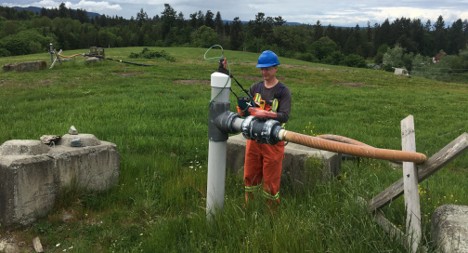
Environmental Monitoring at the Regional Landfill helps determine and track its environmental impact. Measures are in place to reduce and manage impacts to groundwater, surface water, leachate and air quality. The Regional District of Nanaimo conducts monitoring programs to evaluate the following areas:
Leachate Monitoring Program
When solid waste decomposes it produces leachate. Leachate is a complex mixture of organic and inorganic compounds. The percolation of water through the landfill can accelerate leachate production.
The Regional Landfill has leachate containment system It includes a high-density plastic liner and perforated pipes. This system collects leachate for treatments at the regional sewage treatment plant.
To monitor leachates at the Regional Landfill, the RDN looks at:
- Landfill slopes for leachate breakouts
- Samples of leachate for chemical analysis
- Leachate elevations in the refuse mass
These tests allow us to
- Determine the impacts to surface and groundwater
- Mitigating odours
- Monitor for leachate mounding
Both the Ministry of Environment and the RDN Liquid Waste Department require chemical analysis.
Water Quality Monitoring
Movement of leachate from the landfill can affect ground and surface quality. The Regional Landfill's water monitoring program helps ensure landfill operations do not hurt water quality. The program includes the collection and analysis of groundwater and surface water samples.
Groundwater wells monitor water quality along the perimeter of the site. Surface water is also monitored around the perimeter of the site at streams and ditches.
We analyze water samples for:
- Physical parameters
- Geo-chemical indicators
- Dissolved metals
- Dissolved inorganics.
This program helps determine if leachate is leaving the site and impacting nearby water bodies and aquifers.
Landfill Gas
When organic waste decomposes, it generates a landfill gas. Generally, this gas is half methane half carbon dioxide. Landfill gas can migrate through the landfill cover or adjacent soil and enters the atmosphere. Potential impacts from landfill gas can include:
- Nuisance odour
- Explosive hazard
- Vegetative stress
The landfill gas collection system extracts most of the landfill gas produced. It then combusts the gas at the flare station to reduce its impacts. There are soil gas probes at the perimeter to monitor gas composition and migration.
Landfill Post Closure Plan
The RDN has detailed a plan for closure and post closure of the Regional Landfill. Both the BC Ministry of Environment and Regional Board have approved this plan. Funds are being set aside for closure and monitoring costs and to rehabilitate the sire as a community resource.
After closure of the landfill, the RDN must operate and maintain pollution mitigation programs and infrastructure for at least 25 years. Active areas of the site will be capped with a clay cover. A layer of soil will be added to support vegetation and trees and shrubs planted to protect the clay cap layer and landscape the site. Landfill gas and leachate collection and environmental monitoring programs will continue to operate.