Embodied Carbon
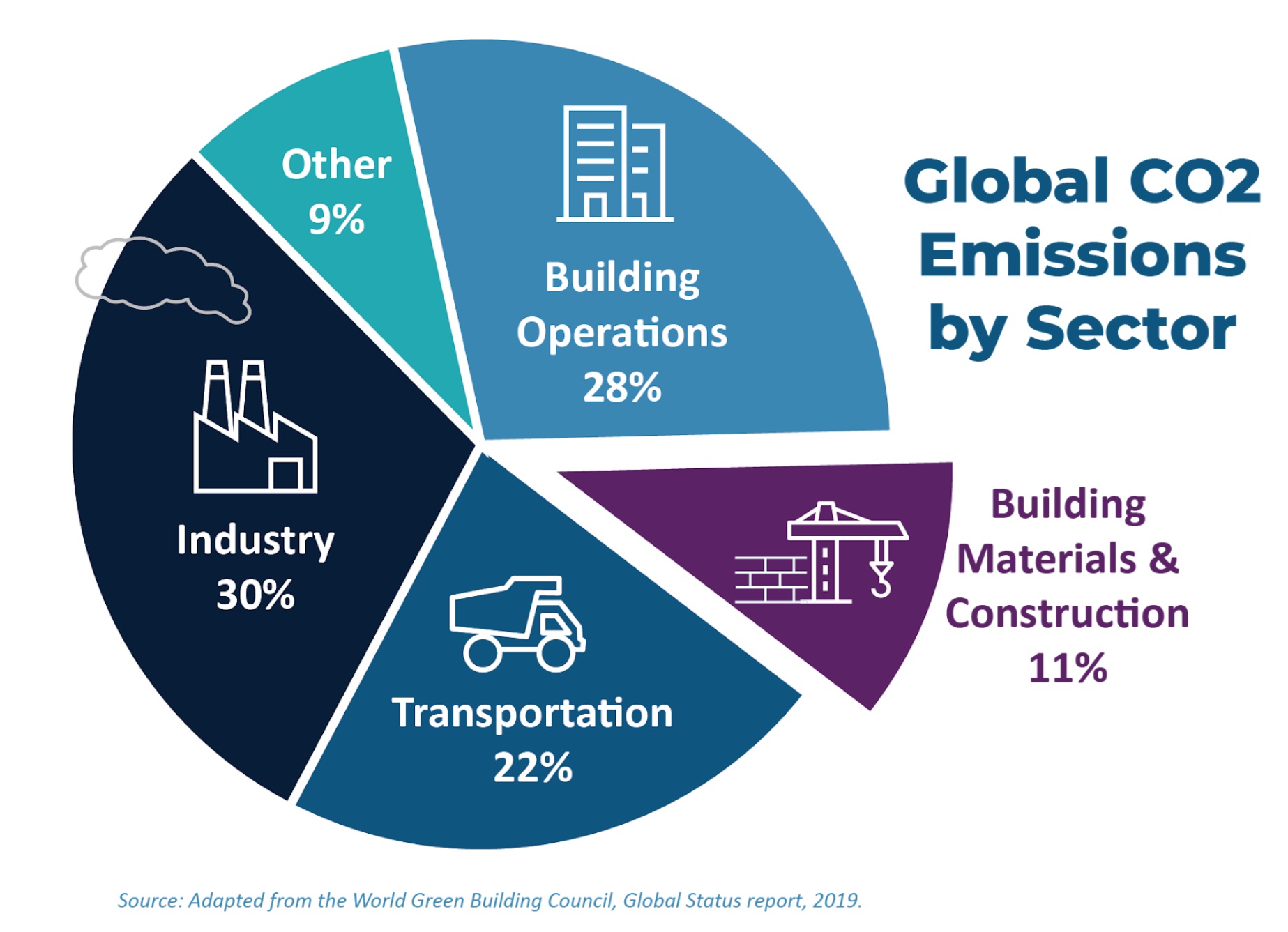
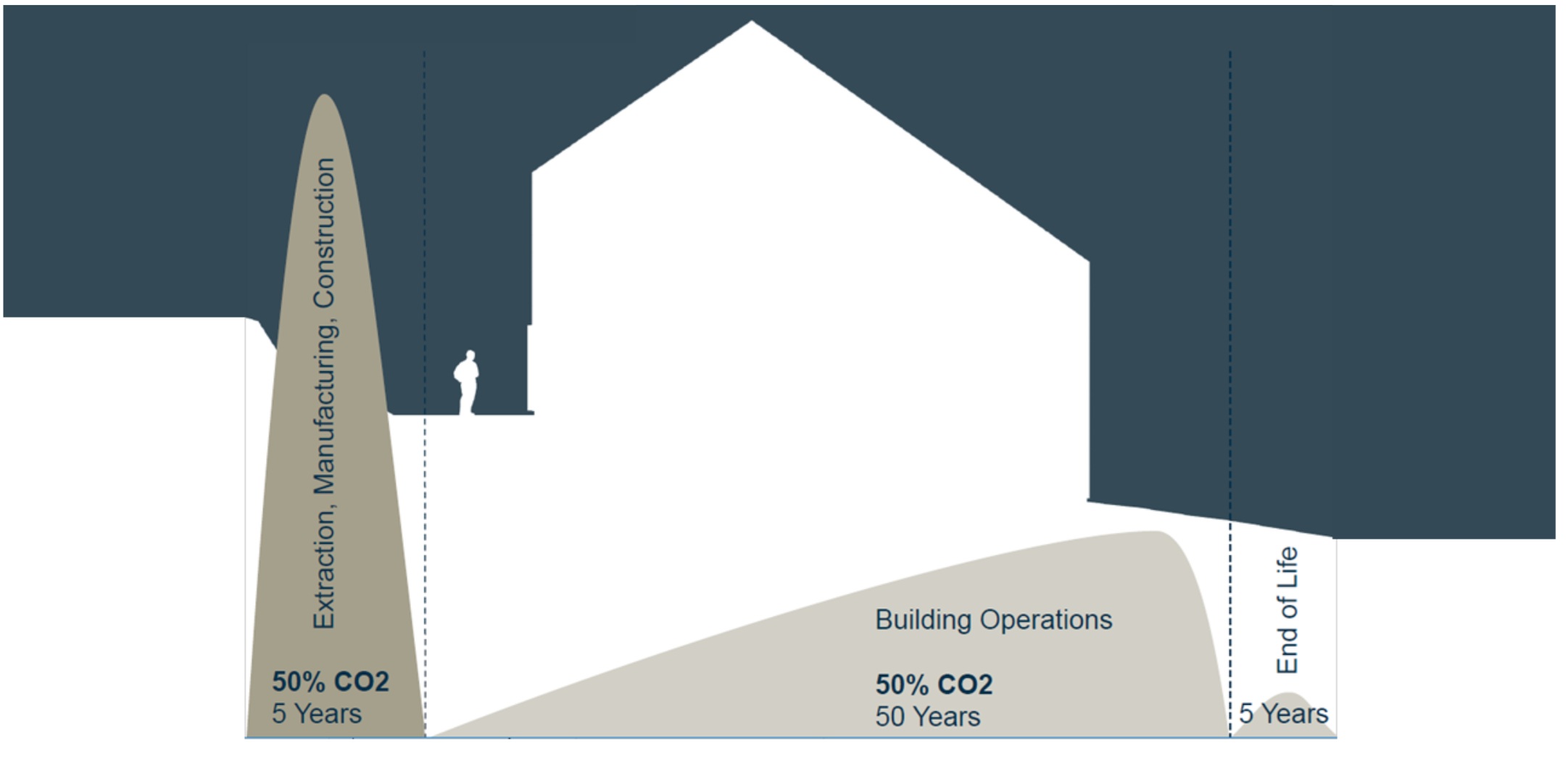
More than half of a building’s greenhouse gas emissions can occur before it is occupied. These emissions come from the materials used to build it, especially concrete and insulation. Buildings account for nearly 40% of global energy-related carbon dioxide emissions each year. Of that total, approximately 28 % comes from operational emissions such as heating and cooling, and about 11% comes from embodied emissions associated with building materials and construction.
Because embodied emissions happen during construction, the greatest opportunity to reduce them is through early, integrated design and material decisions. Many of these choices also improve material efficiency, reduce waste, and support cost and schedule control. The Integrated Design Process (IDP) brings owners, designers, engineers, builders, and suppliers together early to align goals, set a carbon budget, compare options, and make coordinated choices, reducing risk, change orders and delays. Many of these choices also improve reduce waste and support cost and schedule control.
This page provides practical, cost -conscious guidance for builders, designers, homeowners, and residents in the Regional District of Nanaimo who want to reduce embodied carbon on their projects, with IDP considerations playing an important early-design role.
What Is Embodied Carbon?
Embodied carbon refers to the greenhouse gas emissions associated with building materials throughout their life cycle. These emissions are generated before and during construction, as well as at the end of a building’s life.
These emissions occur when materials are:
- Extracted, such as mining or logging
- Manufactured, such as producing cement or steel
- Transported to the site
- Installed during construction
- Maintained or replaced over time
- Disposed of at the end of the building’s life
Unlike operational emissions from heating, cooling, and electricity use, embodied carbon is largely determined before a building is occupied. The graphic below illustrates how a significant portion of emissions occurs early in a building’s life.
Because these emissions are tied to material choices and quantities, the biggest opportunity to reduce them is during the design phase. Once materials are installed, their embodied carbon is largely fixed.
Why It Matters
The greatest cost and carbon savings happen early in a project. Decisions made during design influence material quantities, foundation sizing, specifications, and overall scope. These early choices directly affect budget, schedule, and environmental impact.
Reducing embodied carbon does not require redesigning projects or adding unnecessary complexity. It is about structured early collaboration and making informed choices early to support smoother, more efficient project delivery.
Planning Early Saves Costs
Nearly 50% reduction in embodied carbon is possible with less than a 1% cost increase when decisions are made early.
Schedule Protection
Confirming material options early helps prevent last-minute substitutions and procurement delays.
Growing Demand
More clients and municipalities are asking about lower-carbon approaches. Being prepared strengthens proposals and demonstrates proactive planning..
Less Rework
Clear decisions about structure and materials reduce design changes and on-site adjustments.
Smarter Scope
Right-sizing projects and reusing existing structures can deliver the same value with fewer materials.
Where Embodied Carbon Adds Up
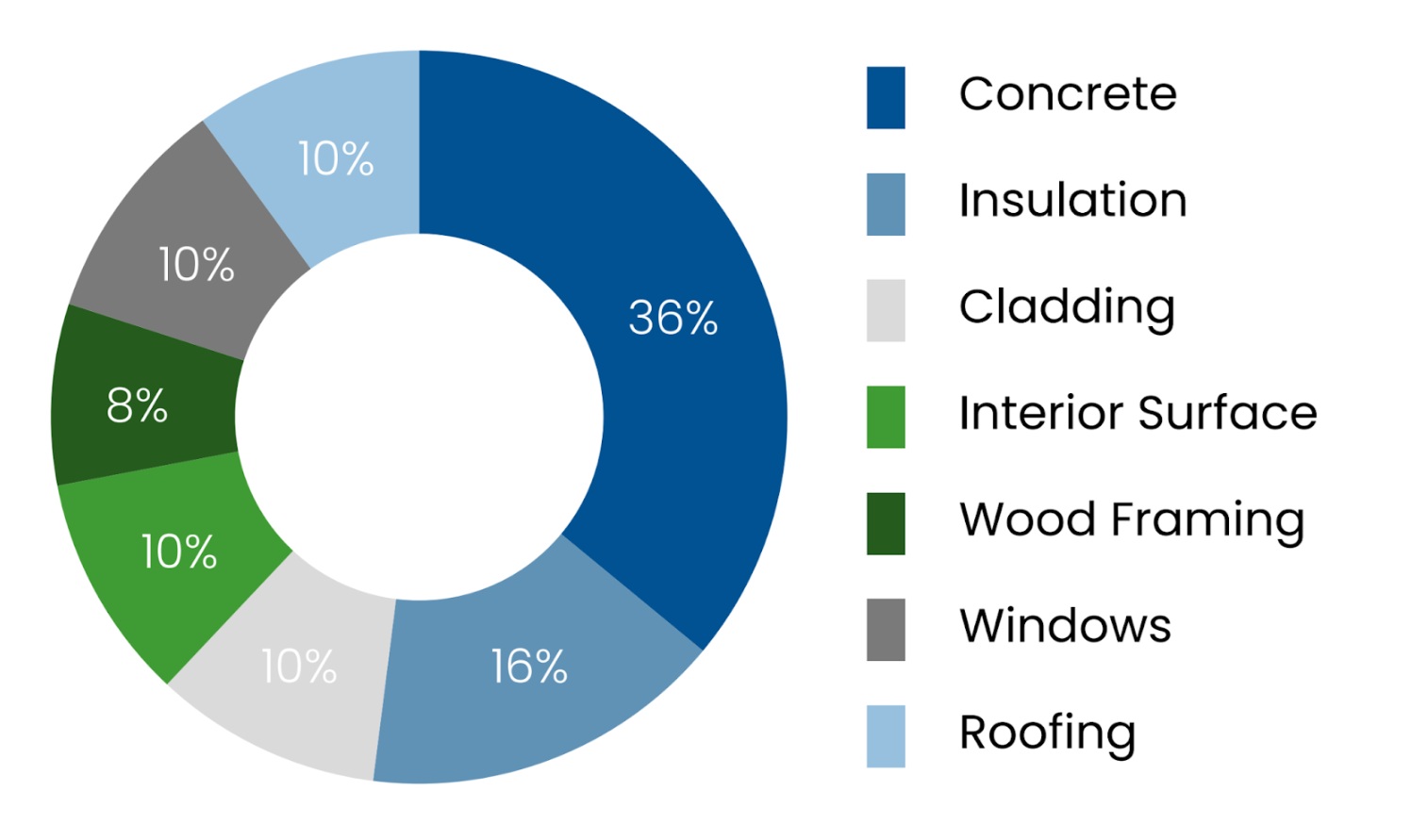
The chart below shows how different building components contribute to embodied carbon in a typical residential project. In residential buildings, concrete is typically the largest source of embodied carbon, especially in foundations and slabs. Because cement production requires high temperatures and releases greenhouse gases during manufacturing, concrete tends to have a higher carbon impact per unit than many other materials. Insulation is another significant contributor, followed by cladding, roofing, windows, interior finishes, and wood framing.
How Different Materials Contribute to Embodied Carbon
Understanding where carbon adds up helps focus attention where it matters most. In general, materials that require more energy to extract, produce, and transport tend to have higher embodied carbon. Reviewing high-impact material choices early in design, as well as foundation sizing and structural efficiency, can lead to meaningful reductions without changing the overall function of the building.
What You Can Do
Reducing embodied carbon does not require redesigning everything. It means focusing on the decisions that have the greatest impact on material use and structural scope. The most effective actions happen early, before quantities and specifications are finalized.
Build Thoughtfully
Before building new, consider whether new construction is fully necessary:
- If applicable, evaluate whether the renovation can meet the needs.
- Consider relocating existing homes where feasible.
- Use deconstruction instead of demolition to salvage materials.
- Confirm reuse/renovation pathways during the IDP kickoff.
Reusing structures preserves the carbon already invested in those materials and avoids new emissions from replacement products.
Build Less
Material quantity directly affects carbon impact. Reducing unnecessary material use is one of the most effective strategies.
Practical actions include:
- Review the foundation size with your designer and engineer to avoid default oversizing.
- Confirm slab thickness based on actual load requirements.
- Simplify the building form to reduce structural complexity.
- Avoid unnecessary structural redundancy.
- Confirm insulation thickness based on energy calculations, rather than automatically choosing the highest level.
Use only what is needed to meet performance and code requirements.
Build Clever
Material choice influences embodied carbon, especially for high-impact components.
Concrete
Ask your concrete supplier about lower-carbon mix options. Some mixes replace a portion of cement with supplementary materials such as fly ash or slag, reducing carbon while maintaining performance.
Insulation
Consider cellulose or mineral wool instead of high-foam options where applicable. Confirm that insulation thickness is aligned with performance modeling.Ask for EPDs
Request Environmental Product Declarations (EPDs) from suppliers. These documents allow comparison between similar products based on environmental impact. Even asking for EPDs signals demand for lower-carbon products.
Build Efficiently
Construction practices also influence embodied carbon.
- Minimize over-ordering materials.
- Plan framing layouts to reduce offcuts.
- Consider prefabricated components, which are built off-site and assembled on-site. This can reduce waste and improve efficiency.
- Separate and recycle construction waste.
- Coordinate early between design and engineering teams to avoid structural redesign.
- Assign responsibilities for waste diversion and prefab exploration in the IDP action plan.
Efficient construction supports both cost control and carbon reduction.
Start With Your Next Project
Top 5 Actions
The following actions can be applied to your next project to reduce embodied carbon while supporting cost and schedule control.
1) Confirm project scope early.
Make sure the building size and layout match actual needs. Collaborate with an architect or design professional early to avoid unnecessary square footage or overly complex forms.
2) Review structural requirements during early design.
Work with the structural designer to confirm that foundation type, foundation size, and slab thickness are based on real load requirements rather than default assumptions.
3) Discuss material options before specifications are finalized.
Ask suppliers about lower-carbon concrete mixes and confirm insulation type and thickness based on performance calculations. See our resource list for more information on where to find material options.
4) Coordinate early with the full project team.
Align designers, engineers, contractors, and suppliers before drawings are complete to avoid oversizing and late changes. It is recommended to commit to an integrated design process and start conversations early.
5) Manage materials carefully during construction.
Order accurately, reduce offcuts, separate recyclable materials, and avoid unnecessary substitutions that increase waste.
Frequently Asked Questions
Will reducing embodied carbon increase project costs?
Not necessarily. When considered early, strategies such as right-sizing foundations, optimizing material use, and selecting alternative concrete mixes can reduce material quantities and help manage costs. Some lower-carbon options are priced similarly to conventional materials. Costs vary by project, but early planning helps align embodied carbon decisions with budget and schedule goals.
Does the BC Building Code regulate embodied carbon?
Embodied carbon is not currently regulated under the BC Building Code or the Energy Step Code. However, awareness is increasing, and many reduction strategies align with efficient and cost-conscious construction practices. Considering embodied carbon now helps projects stay ahead of future trends while maintaining control over cost and schedule.
Does reducing embodied carbon affect building safety or structural performance?
No. Safety and code compliance always come first. Strategies such as optimized foundations or alternative concrete mixes must be reviewed and approved by structural engineers and meet the same performance standards as conventional materials.
Will choosing lower-carbon materials delay my project?
Not when addressed early. Reviewing material options during design helps prevent last-minute substitutions and procurement delays. Early coordination supports schedule certainty.
Is embodied carbon only relevant for large commercial projects?
No. It applies to all building types, including single-family homes. In residential projects, foundations and slabs can represent a significant share of embodied carbon, making them an important opportunity for improvement.
If embodied carbon is not regulated, why should I pay attention to it?
Interest is growing among municipalities, developers, and homeowners. Many reduction strategies also support efficient construction and cost control. Understanding embodied carbon helps projects stay competitive and responsive to changing expectations.
What is Integrated Design Process (IDP) and when should it start?
IDP is a collaborative, early‑stage process that aligns the entire team on carbon, cost, and schedule goals, compares options, and documents choices. It should start at project inception (concept/schematic design) and continue through key checkpoints until tender.
How do I start if this is new to me?
Start with early design discussions. Review foundation sizing with your engineer, ask suppliers about lower-carbon concrete mixes, and confirm insulation choices based on performance modeling. Small decisions made early can make a meaningful difference.
Do you have more questions on this topic? Feel free to reach out to us at sustainability@rdn.bc.ca